The veteran senator, who had just returned from a significant overseas mission, is being remembered this weekend. Newly released emergency audio is revealing the chaotic moments that occurred just before his death.
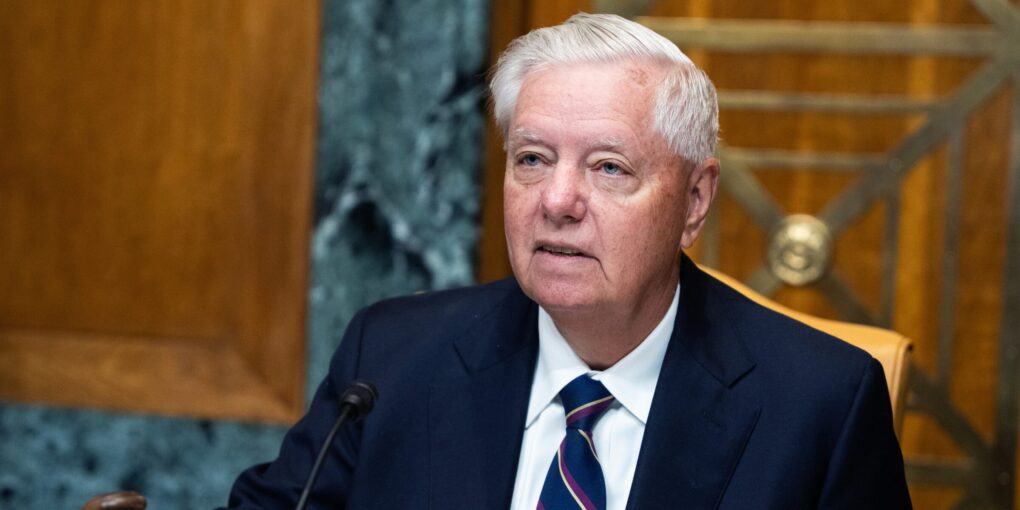
Lindsey Graham, the longtime Republican senator from South Carolina, passed away on Saturday night, July 11, 2026, at the age of 71. His office confirmed the news early Sunday morning, and emergency scanner audio obtained from his Capitol Hill residence is now providing insight into the frantic final hour before he was taken to the hospital.
Graham’s office issued a statement early Sunday morning confirming his death.
“On the evening of Saturday, July 11, U.S. Senator Lindsey Graham passed away from a brief and sudden illness,” the post on X stated. The office added that Graham’s family “appreciates prayers at this time” and requested privacy “during this incredibly difficult period.”
The announcement came just one day after Graham celebrated his 71st birthday, which was on Thursday, July 9, 2026.
What Did Graham’s Office Say About His Passing?
According to police scanner audio obtained by The Washington Post, emergency medical services received a call around 8:30 p.m. Saturday for a person experiencing chest pains at Graham’s Capitol Hill home.
Approximately 25 minutes later, the scanner audio indicated that CPR was already being administered. A neighbor on Graham’s street shared images that showed an older man being taken out of the house on a stretcher and loaded into an ambulance around 9:30 p.m. He was then transported to George Washington University Hospital.
From the sequence captured in the emergency audio, it appears that the chest pains that prompted the 911 call escalated into full cardiac arrest within half an hour, with responders performing life-saving measures at the scene before moving him to the ambulance.
However, Graham’s office has not provided an official cause of death beyond the description in their statement.
What Occurred Inside His Home That Night?
Graham had returned from Ukraine only days before his death, following a meeting with President Volodymyr Zelensky.
Speaking to reporters in Kyiv on Friday, July 10, Graham mentioned that a bipartisan group of senators had reached an agreement with the White House to impose new sanctions on Russia, aiming to help bring an end to the ongoing war with Ukraine.
This trip highlighted Graham’s long-standing role as one of the Senate’s most vocal advocates for a strong national defense and active engagement with American allies abroad.
Where Was Graham Just Before His Passing?
As of now, President Donald Trump has not made a statement regarding Graham’s passing. However, the current president had previously competed with Graham for the 2016 Republican presidential nomination before they became close allies. He praised Graham during a recent telerally for him.
“He’s outstanding. He’s been at my side for a long time,” Trump remarked, adding that “after that fight was over, we were best of friends, and he’s helped me as much as anybody in the Senate.”
A few politicians have already shared their condolences, including South Carolina Governor Henry McMaster, who honored Graham in a statement, calling him “the fiercest of fighters for South Carolina and America” and “a loyal and steadfast friend.”
Who Has Responded to Graham’s Death?
Under South Carolina law, Governor McMaster now has the power to make an immediate appointment to fill Graham’s vacant Senate seat.
Graham’s death tightens the Republican Party’s already slim majority in the Senate, where the GOP held a 53 to 47 edge. This majority was facing additional pressure from the anticipated absence of another member, as Senator Mitch McConnell of Kentucky, 84, has reportedly been hospitalized since last month with limited updates on his condition.
Graham had been actively campaigning for reelection this year before his untimely passing.
Who Will Succeed Him in the Senate?
Graham’s political career spanned over three decades. He was first elected to South Carolina’s state house in 1992 and then to the U.S. House of Representatives in 1994, making history as the first Republican to represent the state’s Third Congressional District since 1877, as stated in his official biography.
He won election to the U.S. Senate in 2002 and was reelected in 2008, 2014, and 2020. In 2008, he became the first person in South Carolina history to receive over one million votes in a general election.
At the time of his death, Graham was the chair of the Senate Budget Committee and also served on the Appropriations Committee, the Judiciary Committee, and the Committee on Environment and Public Works.
According to his congressional record, he previously chaired the Judiciary Committee and was one of the House managers during the 1998 impeachment proceedings against President Bill Clinton. He also made an unsuccessful bid for the Republican presidential nomination in 2016.
Before entering politics, Graham had a distinguished military career. He served six and a half years on active duty as an Air Force lawyer, including time in Germany from 1984 to 1988. Later, he joined the South Carolina Air National Guard and, in 1995, transitioned to the Air Force Reserves, serving during military operations in Iraq and Afghanistan.
Graham retired from the Air Force Reserves in June 2015, holding the rank of colonel and concluding 33 years of military service.
He was raised in the small town of Central, South Carolina, where his parents operated a restaurant and pool hall. Graham was the first in his family to attend college, earning both his undergraduate and law degrees from the University of South Carolina. He lived in Seneca, South Carolina, and was a member of Corinth Baptist Church.